
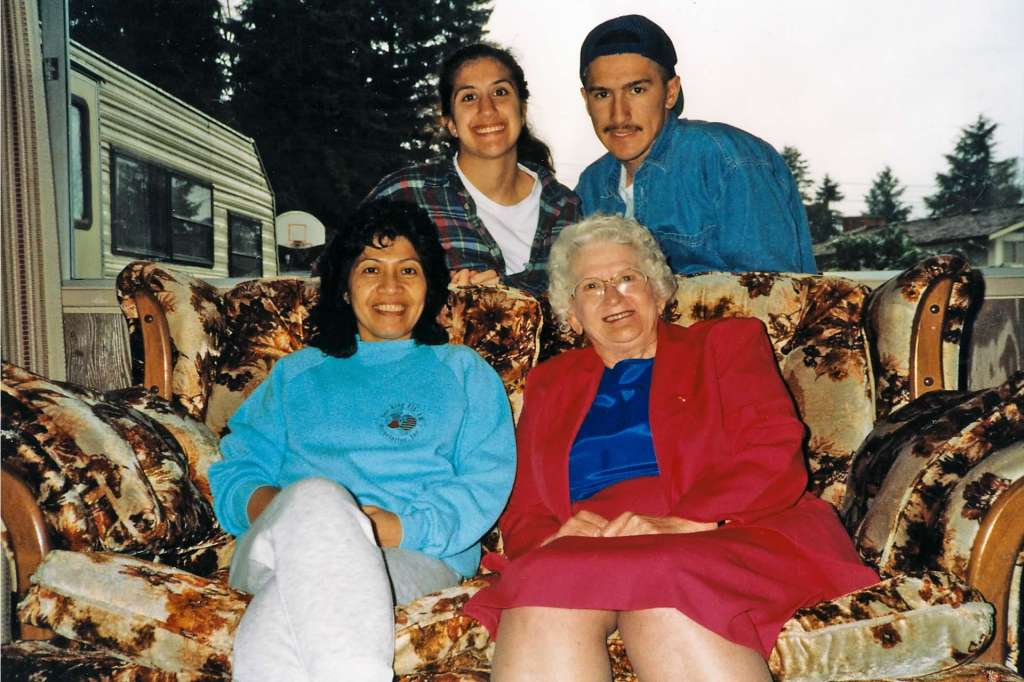
February 2, 2026 would have been my mom’s 78th birthday. She passed away almost 30 years ago from gastric cancer. She was 49 years, 10 months, and some change old when she left us.
Today, we celebrate her heavenly birthday.
Carina M. Bayne — daughter, sister, wife, mother, friend.
I want to pause for the cause and reflect on the person I called Mom. If I’m being honest, any time I used her government name, it never quite fit. It sounded formal. Distant. Like it belonged to paperwork, not to the woman who raised me.
Many people knew Carina as a friend, a coworker, a steady presence. She was the daughter of Felimon and Rosa Muldez, sister to six siblings. Wife to Charles C. Bayne. Mother to my sister and me.
But I don’t want this to read like an obituary. Those always feel cold to me—like a checklist of roles instead of a reflection of a life. Dates. Titles. Labels. Necessary, maybe. But incomplete.
This is how I remember my mom.
I remember how she made ordinary days feel safe. How “home” wasn’t a place so much as a feeling she carried with her. How she loved fiercely, even when she was tired. Especially when she was tired.
She didn’t get enough time. That truth never really softens. But the love she gave in the time she had? That’s still here. It shows up in the way I move through the world. In how I love. In what I value. In the pauses I take to remember.
So today isn’t about what was lost.
It’s about what remains.
Happy Heavenly Birthday, Mom.
You’re remembered. You’re loved. Always.
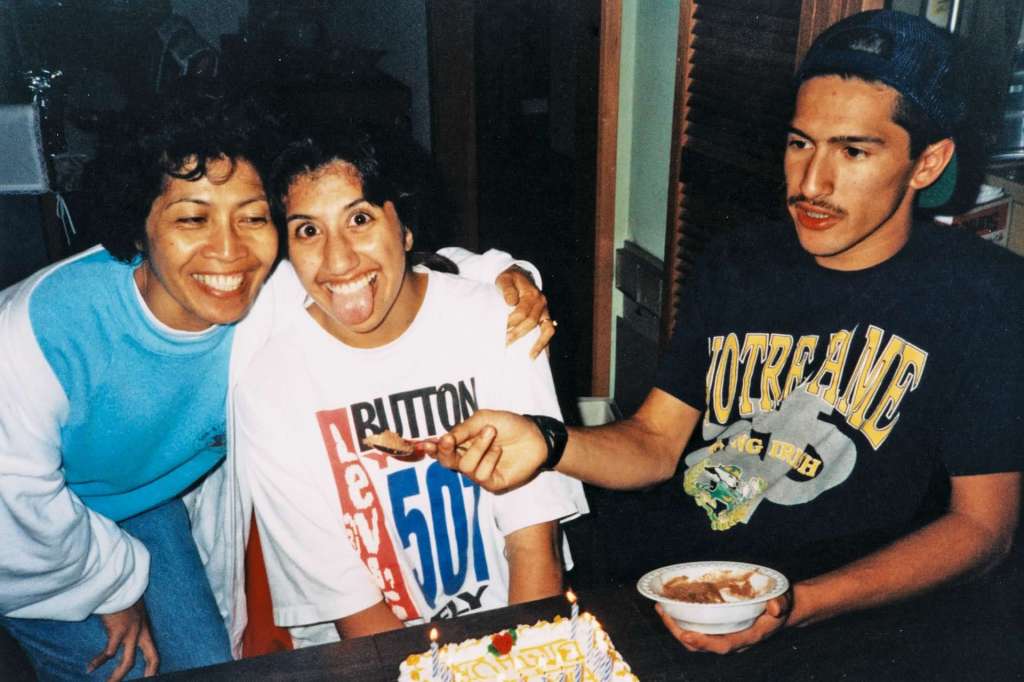
Typical But Not Ordinary
I realize many of my readers, subscribers, and friends never met my mom.
She was a tried-and-true, dyed-in-the-wool, authentic Filipina.
She was short—claimed 5’1”, though that number was generous—but she was never diminutive. Not in presence. Not in spirit. Not in strength. She was built Tonka Truck tough.
Black hair (usually permed), rich mocha skin, a big smile always ready, and a designer handbag filled with… Ziploc bags. Because of course it was. If that image feels familiar, it’s because you’ve seen her before—just not by name. She was essentially Jo Koy’s mom, the one he lovingly chides in his stand-up bits.
So yes—my mom was his mom too.
I digress.
She lives on in my memories. She’s kept alive in the stories I tell and re-tell—sometimes intentionally, sometimes without realizing I’m doing it. She shows up in laughter, in timing, in the way certain moments still play out in my head like well-worn scenes.
I’ve already shared some of those stories before. I’ve reread them myself.
So here—right now—I want to share new material.
This is how I remember my mom.
Tuff Skin
She quietly entered my room.
“Psssst.”
(The Filipino verbal signal for I want your attention right now.)
“Okay, Caloy. Let’s go clothes shopping for back to school.”
I groaned. I had been dreading this exact moment.
“Yes, Mama.”
She fired back immediately, “What? What. What is this moaning? You’re getting new clothes.”
I muttered under my breath—which she detested.
“New clothes from Sears.”
“Stop mumbling and get in the car,” she said, swatting me on the head as I passed through the doorway.
Sears at Alderwood Mall — where my mom meant well and I feared for my social life.
Like always, we went straight to the jeans first. As a Gen Xer, I was raised with a healthy dose of “self-directed problem solving,” which usually meant I was hard on my clothes. Toughskin jeans were practical—double-layered knees, extra durability, damn-near indestructible.
But they were not stylish.

And I was becoming a young man who wanted a transformative summer—the kind Sandy had in Grease. I wanted to walk back into school different.
My mom pointed with her lips toward a pile of jeans and sizes.
And I snapped.
Something feral erupted from inside my soul.
I ran to the display, grabbed a pair of Toughskins jeans, and held them high above my head. With a guttural, primal roar, I slammed them onto the thinly carpeted floor and stomped on them. I escalated into full X-Men Wolverine berserker rage, clearing off the Carlos-height shelf of jeans like someone making room on a coffee table for an oversized map.
A Sears employee came running.
My mom stood there, stunned into silence. Normally by now she would have tested the theory that it takes eight pounds of pressure to rip a human ear off, using her acrylic-nailed thumb and index finger to drag me away. But usually, I was well-behaved. Obedient. Happy.
This was different.
After a brief, half-hearted attempt at cleaning up, she ushered me out of the store. Her next objective was retreat—back to the big green Duster.
I wasn’t having it.
She would’ve had better luck trying to baptize a cat. My unhinged behavior granted me supernatural strength.
Exasperated, she finally yelped,
“What is the matter with you?”
Through crocodile-sized tears and blubbering sobs, it all came out.
“I don’t want to wear those jeans anymore. I don’t want any of those shirts you pick out. I hate my haircut. I don’t want you picking out my identity anymore. I’m tired of being picked on. I’m tired of being bullied.”
And there it was.
Years of torment. Years of anger. Years of wanting to cut the apron strings—released in one explosive moment.
She pursed her lips and paused. That pause alone told me everything. Carina didn’t usually pause.
“Caloy,” she said gently, “if that’s how you felt… why didn’t you say anything?”
I kept crying.
“I dunno.”
She looked more surprised than hurt.
This is when my self-directed problem solving bubbled up. “I know what I want,” I continued. “I know there’s not much in the family checkbook, but I can pick jeans and shirts that work with what I already have.”
Then, quieter but firmer:
“And I want a decent haircut. Not at home.”
She smiled. “Okay, young man. Can we go back into the mall now?”
“Yes,” I said, wiping the remaining tears with the sleeve of my plaid long-sleeve shirt. “I’ll pick the styles. We try on the sizes. I’ll bring everything to the cashier. But you pay.”
She nodded. “Deal.”
Then she placed her arm around my shoulders. “Let’s walk through the JCPenney entrance instead of Sears, yeah?”
And just like that, we walked back inside—side by side—no longer adversaries, but a mother-and-son team.
Ready Player One
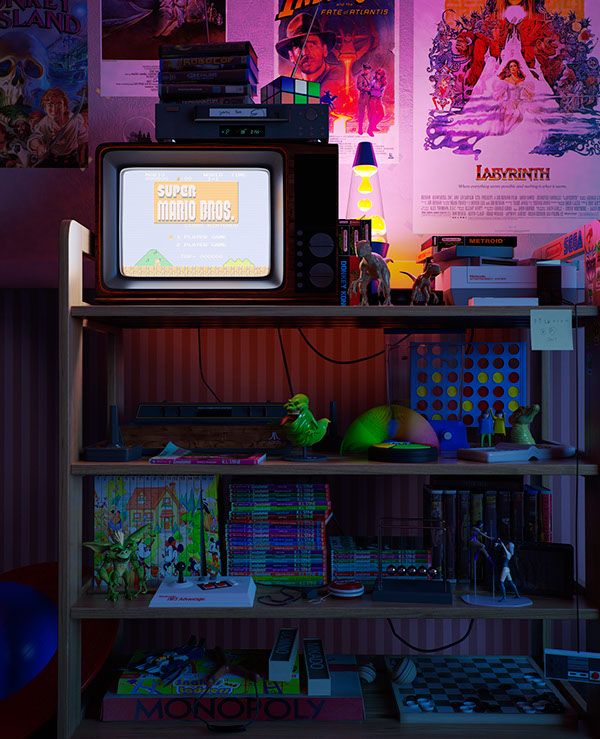
One particular Christmas, my parents gifted my sister and me a 13-inch color TV.
We were amped.
I knew exactly what I was going to do.
I carefully placed my NES on top of that brand-new, shiny television like a crown on a king—or the final LEGO piece clicking into place on a completed build. An upgrade had occurred.
I fired up Super Mario Bros. because, to date, I still hadn’t beaten it. My sister usually played Luigi, Player Two. We played happily for hours, swapping turns, celebrating small victories, blaming the controller for failures.
My mom’s natural curiosity eventually drew her into our shared bedroom.
You have to understand: Filipino English hits differently. The grammar is correct. The sentence structure is perfect. But certain consonants—B and V especially—refuse to cooperate.
“Caloy,” she said, peering at the screen,
“I would like to play the BID-gee-oh game. Will you allow it?”
My sister and I exchanged that quick sibling look—the one that says this is going to be something.
“Sure thing, Mama,” I said, resetting the game.
I placed the controller in her hands for the tutorial.
“Okay, Mama. With your left thumb, the arrows control which direction Mario goes. Left for left, right for right. The A button is to run. The B button is to jump.”
“I know how to do it,” she barked.
That was pride talking. She absolutely did not know.
My sister and I sat behind her, projecting the future in real time. The first few seconds were exploratory. We could already see her upper lip pointing in the direction she wanted Mario to go. Both hands clenched the controller, moving it rightward, the cord whipping through the air like it was part of the control scheme.
“Why did the little man die?” she asked.
“Mama, you have to jump over the pit,” I said.
She mashed buttons.
“Jump! Jump!”
Left. Right. Boing. Boing. Boing.
Mario looked like he was having a digital seizure.
She grumbled.
“This gawddamn thing. Get over there.”
More lip-pointing. More mid-air steering. She managed to clear a couple of pits through sheer willpower.
And then her true nature emerged.
She pulled too hard to the right—yanking the NES clean off the top of the TV. It crashed onto the shag carpeting. The lid popped open. The cartridge launched out like a piece of toast.
Game over.
She stood up, done.
“I don’t understand how you find that entertaining,” she said, stomping out of the room.
My mom had the patience of a gnat.
And somehow, we loved her all the more for it.
I remember her laugh first—how it arrived before she did, how it filled a room and stayed longer than the moment. I remember her strength, the quiet kind. The kind that doesn’t announce itself, but shows up every day anyway. I remember her hands—always busy, always giving, always doing for others before herself.
Zero To Crisis
self-directed problem-solving, adaptive risk management – better threat assessment, it’s why I can walk into a crisis and simply start problem solving.
comfortable solutitude capacity. analog patience. unsupervised autonomous wiring.
My mom was a lot of things in life, but she was definitely not the person you wanted handling a 9-1-1–level emergency.
In fact, you actively prayed she wasn’t the source of the chaos—
even though she usually was.
Think I Love Lucy… but set in the Philippines.
I didn’t blame her, and I never really got frustrated. I knew she simply didn’t know how to react. No formal safety training. No learned crisis protocols. No instinctive problem-solving muscle memory. When there’s no habit in place—no adaptive risk management—you panic. And once panic takes over, mistakes multiply.
Such as this.
My mom was cooking dinner on a cast-iron skillet. I was in the living room, playing with either G.I. Joe action figures or LEGO—I honestly can’t remember which. Then I smelled it. Burning.
From the kitchen, I heard her yell,
“Caloy! Caloy!” [This was my Filipino name, by the way]
I jumped to my feet and ran in.
Three-foot flames shot up from the stovetop. I whipped my head toward my mom just in time to see her filling a pot with water.
I knew instantly: that was not the solution.
My dad was a basketball coach. Charrina and I were trained accordingly.
I waited until my mom—who didn’t have the arm strength to lift a full pot—lowered it like a basketball player backing down an opponent in the key, trying to use momentum to raise it up. As her arms came up, I braced my right forearm over hers and smacked the pot out of her hands like I was blocking a shot.
The pot dropped to the floor like a weight ball.
I pivoted in front of her, boxed her out, and pushed my butt back to hip-check her out of the danger zone. With my free left hand, I reached over the stove, grabbed the open box of Arm & Hammer baking soda, and dumped a heavy clump directly onto the grease fire.
Instantly extinguished.
She sighed, then cried out in protest,
“Why did you hit me?!”
(You have to imagine that with a Filipino accent.)
I rolled my eyes—loudly.
“I didn’t hit you,” I said. “I prevented you from splashing a grease fire all over the wall.”
Right then, my dad burst through the door, fresh from work.
“Why is there smoke?” he asked, casually strolling in.
He took in the scene: water splashed across the floor, a mound of baking soda sitting in the cast-iron skillet, my mom, and me.
“A grease fire, eh?” he said. Then he looked at me.
“Good job, Los.”
“Thanks,” I grumbled. “Mom tried to burn down the house.”
Without missing a beat, my dad chose violence with his next words.
“So… is dinner ready?”
Another time, I came home from school and parked my black Huffy—number 54 bolted proudly to the front—before heading inside with my key dangling from a string around my neck. Quintessential latchkey kid behavior.
My mom wasn’t in the kitchen. That alone was unusual.
Then I heard it.
Water.
Not a shower.
Not a bath filling for a soak.
This was… aggressive.
There was muffled talking coming from the bathroom—the only one we had for years. As I walked closer, my shoes sank slightly into the carpet.
Wet.
I peered inside and found the scene.
My mom was crouched under the sink, cabinet doors flung open, taking a full, fire-hose-level blast of water directly to the face. The pressure was impressive—municipal-grade. She flailed her arms wildly beneath the pipes, grasping at nothing, trying to stop it through sheer determination.
This was straight ’80s Saturday morning cartoon territory. Full Tom and Jerry nonsense.
By this point in my life, I was already taller than my mom. Add my backpack, and I definitely outweighed her—she was maybe buck-ten soaking wet, with a rock in each hand.
I walked over calmly, hip-checked her out of the splash zone without getting wet myself, crouched down, and reached past the busted pipe. With my small but surprisingly strong hands, I shut off the water supply.
We watched together as the stream—strong enough to punch a hole clean through the drywall—went from full blast… to trickle… to nothing.
I exhaled.
“Guess I’m gonna learn how to repair drywall with Dad.”
She snapped back immediately,
“Stop complaining. Help me clean up this water before your dad gets home from work.”
And just like that, crisis resolved—
lesson deferred—
panic forgotten.
Got Crabs? 🦀
My Dad served in the Navy during the Vietnam War. When he came home with a mustard yellow 16-foot cabin cruiser on a boat trailer the family didn’t even blink.
In fact, the name was logical: C 4 B.
His intentions of troll fishing didn’t incorporate Mom’s motives.
You see, while Mom was a typical but not ordinary Filipina, she loved seafood. Specially crab. Not just any crab! Fresh caught, Puget Sound harvested, Dungeness crab.
Remember she was born and raised in the Philippines for the first 25 years 🇵🇭 A civilized country, but “3rd World” in some aspects such regulations on fishing …
Ironically enough, as an islander, my Mom didn’t know how to swim.
Motivated Mother
One July afternoon it was time to return to our crab pots that we dropped in the early morning. We launched out of the Everett (WA) Marina, so we would do the same.
We were experienced so we knew where to drop. That is, Dad, Charrina and I. Mom was also prone to seasickness too.
But today she insisted on going with us. Remember we have an established habit loop …
Dad was Captain, WCP was First Mate, and I was Sailor. Dad and I did everything else together so Charrina and him bonding on the water was fine by me. Fishing is not my vibe, WCP can have it with no contest.
We rode in silence across the water. Dad slowed up, Charrina armed with the hook and I was ready to haul it up and in.
Mom? Just not be “in the way”. Which was terrible at.
Same process as before: haul in, move the crabs into buckets 🪣 and/ or coolers, strap down the now-empty crab pots to the top, and we motor back.
Figure It Out
On the way back since it’s a hella down time (down time) you might as well be productive while on a boat. Considering the cramped quarters, it’s not easy to do, but possible. You can, and should sort out the crabs.
Dad was Captain, and pilot, therefore, he couldn’t do it. Charrina was First Mate but only when Mom wasn’t onboard. So Mom sat next to Dad facing forward to reduce the chance of seasickness. Between my sister and I, we sorted out the crabs. I appreciate order, rules, and policies that make sense. My sister didn’t like the possibilty of being pinched, or wounded by crabs, and I knew this. Every time was my time, and I would do a yoeman’s job of it.
I memorized the types of crabs, and the harvesting limits of each. With this practiced habit of crab sorting (cue, craving, response, and reward) I got to work.
I usually focused on narrowing my field of vision by tossing out the crabs too small. Nature doesn’t conveinently sort themselves as they crawl into the one-way crab trap. I’ve gotta do that. Red Rock, Dungeness, males, females, adults, and children. All crowded into plastic 5-gallon buckets, it was difficult to grab their rear, undefended shells.
However, for my small hands, it was navigated. I usually cleared the cooler for the first pass “keeps” with some water. Like a manual laborer sorting I would chuck the crab over my shoulder as it would land back into the water behind the C 4 B’s wake. Sploush. Splash into the cooler. Amongst the wake, would be the random, airborne crab.
My trained eye would also pre-select the biggest crabs for the day’s haul. I would maximize the family’s effort. Mom turned her head back, “What are you doing, Caloy?!”
“I’m sorting, Momma,” I grumbled as I grabbed another reject, and tossed it overboard.
“You’re throwing away my crabs!” she bellowed.
“I’m protecting the family,” I muttered as I finished up the first pass. I immediately start the second / final sort. I quickly identify the biggest Red Rock crabs. Top 6 stay, everyone else out. Dad’s almost to the no-wake zone.
Plop, plop, plop.
Mom stands up to get back to me. “Stop that!” she barked.
I ignored her. She has no idea how to do this. Dungeness was last, because they were the most difficult to not getting wounded and most particular. 6-inches or bigger, males only, 5 per person per day.
To me that meant the Top 20 stay. Ranked 21st and beyond were tossed. Well, we didn’t have that many. So all the crabs that are males, stayed. The following happened so fast, yet slow-motion.
I pitched the final female into the air with prejudice because it pinched me, pissed me off, and hurl it, Dad slowed down rather quickly because we rounded the breakwater / no wake zone, and Mom stumbled towards me, but somehow managed to snatch the flying crab mid-air with her rather-short arm.
She racked herself the side of the boat like a Seattle Mariner outfielder denying an opponent’s home run blast over the fence. WCP, and I grabbed the back of coat to prevent her tumbling into the Puget Sound’s bitter cold water knowing she doesn’t know how to swim, and refusing to rock a life vest.
“MOM!” we cried.
She smiled as she held her precious crab. Then? I knew to smack the bottom of her hands to launch the angry sea creature back into the murky depths of cold water. The female Dungeness crab, Deborah, flung through the air from the sea-borne trebuchet of human arms, and anger.
She furrowed her brows, pursed her lips. “That was my delicious crab.”
“That thing would get us fined, possible jail time, and confiscated boat, Lovey,” Dad finally interjected. The only authority my Mom would sometimes listen to.
“We could’ve hid it in the front of the … boat, ship,” Mom defended.
“Bow, Mom,” all three of us corrected her terminology.
“Whatever!” she pouted.
“It’s a female, she is needed for population replishment,” Dad clarified. “Oh, look, a Washington State Fish & Wildlife rep is checking.”
It wasn’t, but it was enough to clam her up for the rest of the trip (see what I did there?) Needless to say, she did enjoy her delicious legally caught crab that night.
Coupons, Bloody, Coupons
When you grow up poor—actually poor—like my mom did in a so-called Third World country like the Philippines, you develop money-saving habits that never leave you. And honestly, that makes sense.
Dad was the breadwinner. Mom’s role was child-rearing, which meant cooking—every day—and stretching whatever dollars came through the door. One thing America introduced her to was a strange new economic language: weekly discounts, percentage-offs, buy-one-get-one-free deals, and her personal favorite—
Coupons.
GAWD, she loved clipping coupons.
Sunday mornings were sacred. The newspaper came out. Scissors appeared. Coupons were clipped with purpose, sorted, stacked, and guarded like negotiable instruments. This wasn’t casual frugality. This was strategy.
And every time I look down at my right hand, at the permanent scar that never quite fades…
That’s what I think of.
I should also mention this about my mom.
She could not—could not—handle the sight of blood.
Not a paper cut.
Not a scraped knee.
Not a drop.
Blood didn’t make her cautious.
It made her disappear.
Once Mom was done combing through the Sunday newspaper, we’d bundle it up for recycling. We got paid for it—not a bankroll, but enough to create a habit loop.
One particular weekend, Mom fell behind on her coupon duties.
It was summertime, so I was home on a Monday. Dad had already gone to work. I was awake, deep into Super Mario Bros. on my NES. Mom was banging around in the kitchen, which also doubled as the laundry “room,” if you squinted and lowered your standards.
“Caloy! HOY!”
I didn’t answer.
Then came the hallway PSSSSST—the Filipino summoning sound that meant you are already late. My bedroom door flew open.
“HOY,” she said. “Stop the BID-GEO game and help me find the Sunday newspaper.”
Begrudgingly, I paused the game and put the controller down.
“Yes, Momma.”
I searched the recycle bin inside the house. Nothing.
“Momma, Dad and I already bundled the newspaper for recycling. It’s too late,” I said.
I don’t know what hit me first—the realization that I never should’ve said that…
or my mom’s open-handed swat to the dome.
“Don’t tell me it’s too late!”
I knew exactly where the newspaper was.
Bundled tight with brown twine—Dad’s doing—and stacked on top of the growing pile on the workbench in the cold, dark garage. And while I was a teen-going-on-30 in attitude, I was still very much growing in height.
I sighed and trudged into the garage, muttering, “This is cutting into my gaming time.”
Three bundles high. About forty pounds each.
I rose onto my tiptoes, stretched my arms up, and hooked the bottom bundle with my small hands, coaxing it forward inch by inch.
Then the twine caught.
Fine.
I figured I’d catch it. Bring it inside. Problem solved.
The edge of the workbench was thin sheet metal—thin enough to become a razor under pressure.
The bundle came down fast. I braced my arms like I was catching something delicate.
It was neither.
The weight pinned my hands against the metal edge before crashing to the concrete.
I knew immediately.
I had filleted the skin on the top of my right hand.
“FAWK… that hurt.”
A flap of skin—two inches long, three knuckles across. Blood everywhere.
“Great. Now what?”
I pressed down with my left hand and went back inside. Mom wasn’t in the kitchen. I grabbed a kitchen towel and committed the unforgivable sin: I wrapped my hand tight to stop the bleeding.
As I rounded the corner, Mom came out of the bathroom and froze.
She looked down.
And exploded.
“WHAT are you doing with MY KITCHEN TOWEL?!”
Before I could explain, she yanked it away—fast and decisive—like she was snatching an airborne crab mid-flight.
The blood had dried into the terry cloth. When she pulled, it peeled the skin back again.
She looked at the towel dangling from her hand, red and limp like a skinned rabbit.
Her eyes rolled back.
She dropped to the floor like a sack of rice.
DAMN IT.
Now I had two crises.
I rolled a towel into a pillow and gently placed it under my unconscious mother’s neck. Yes—mother. I wrapped the bloody towel back around my hand and went to the phone.
Calling Dad at work was for emergencies only.
“Thank you for calling Pacific Northwest Bell. This is Charlie.”
“Dad, it’s me,” I said. “Your son.”
“I said for emergencies only.”
“Well, I have two emergencies,” I replied. “Mom fainted. Other than raising her hand, what should I do?”
“Why did she faint?”
“She saw my bloody hand after it scraped your stupid workbench.”
“She saw blood? You know she can’t—wait. What’s wrong with your hand?”
I snapped.
“Mom wanted her FAWKING coupons that were already bundled, tied, and stacked to the ceiling. While getting them down, my hand got cut. Badly.”
“Oh,” he softened. “Are you okay? Hospital? Stitches?”
“Nah. I used her kitchen towel as gauze. I’ll live. What about MOM?!”
“Did the back of her head hit the ground?”
“Yeah… and no. Carpet living room. Legs in the kitchen.”
“Oh,” he said calmly. “She’ll wake up eventually.”
Then, without missing a beat:
“But you better hope that blood comes out of that towel.”
This Is How I Remember My Mom
These are the stories that stayed.
Not because they were the biggest moments, or the most important ones on paper—but because they were her. Loud. Loving. Chaotic. Certain. Wrong sometimes. Right when it mattered.
She wasn’t calm in emergencies.
She didn’t follow rules just because they existed.
She loved fiercely, saved obsessively, panicked creatively, and showed up fully—every single time.
She raised us with what she had, where she came from, and what she believed would keep us fed, safe, and moving forward. Even when the execution was questionable. Even when the situation got… slapstick.
Especially then.
These stories aren’t meant to explain her.
They’re not meant to justify her.
They’re simply how she lives on in me.
And the truth—the quiet truth underneath all of this—is this:
She Truly Didn’t Have Enough Time
But the time she did have?
She filled it.
With love.
With noise.
With food.
With lessons disguised as chaos.
With memories that still make me laugh out loud decades later.
And if that’s the measure of a life—
not its length, but its impact—
then my mom left more behind than most ever do.
Happy Heavenly Birthday, Mom.
This is how I remember you.


Leave a comment