October 21. The date, and day, usually flutters by on most calendar as “another Tuesday” in October. Not for me, and not for fans of Marty McFly, or fans of Doc Brown’s time machine, crammed inside of a DeLorean. As a kid in 1982, I didn’t know of the DeLorean’s troubles and upcoming punchline in the 1985 hit movie, Back To The Future.
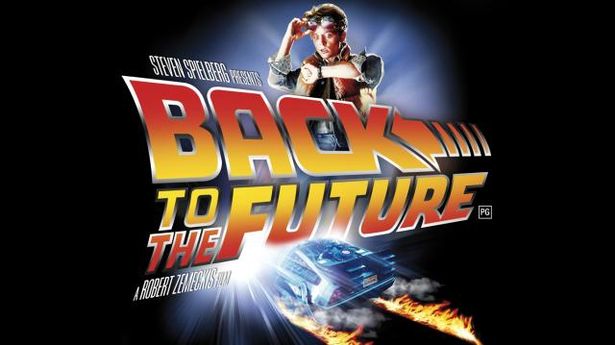
People sometimes laugh at the DeLorean DMC-12 because it was an expensive, underpowered car that became a symbol of a spectacular commercial flop and the scandal of its founder, John DeLorean. By the time the film Back to the Future came out in 1985, the car was already a punchline for audiences who remembered its disastrous failure.
Performance failures and poor quality
While it looked like a futuristic supercar, the DeLorean’s performance was anything but.
- Underwhelming engine: The car was powered by an underperforming 130-horsepower V6 engine, resulting in sluggish acceleration. Road & Track recorded a 0–60 mph time of over 10 seconds, which was considered poor for a sports car.
- Mediocre handling and ride: Its chassis and suspension design resulted in unresponsive handling and an uncomfortable ride, failing to live up to the image it projected.
- Flawed build quality: Quality control issues plagued the DeLorean. Many vehicles suffered from electrical problems, misaligned body panels, faulty door struts, and interiors that felt cheap despite the high price tag.
Impractical design elements
Some of the DeLorean’s most distinctive features were also its biggest flaws.
- Heavy gull-wing doors: Though they looked cool, the gull-wing doors were heavy and difficult to open in tight parking spaces. In a rollover accident, there was a high risk of the doors failing to open at all.
- Stainless steel body: The bare stainless steel body was prone to dents and smudges, including fingerprints, which were difficult to clean.
- Tiny side windows: The tiny, “letterbox” windows couldn’t be rolled all the way down, making interactions at drive-thrus difficult.
Expensive market failure
The DeLorean was released at a time of economic recession, with a price tag that was too high for what buyers received.
- High cost: At its release, the DMC-12 retailed for nearly $25,000, roughly twice the cost of a contemporary Chevrolet Corvette.
- Poor sales: Sales figures never met projections, and the company produced fewer than 9,000 cars before going bankrupt in 1982.
- Failed promise: The car and its manufacturer were viewed as a symbol of over-the-top styling that couldn’t deliver on its promises.
Founder’s infamous scandal
The reputation of the car was permanently damaged by the legal troubles of its founder, John Z. DeLorean.
- Cocaine trafficking bust: To save his failing company, John DeLorean became involved in a cocaine trafficking deal in 1982. He was arrested in a federal sting operation.
- Reputation ruined: Although he was later acquitted by reason of entrapment, the incident ruined DeLorean’s reputation and left investors out millions of dollars. For many, the car became inseparable from the sordid story of its creator.
Pop culture’s mixed legacy
While Back to the Future cemented the DeLorean’s place in popular culture as a cool and futuristic machine, the filmmakers originally chose it for ironic reasons. For audiences in 1985, Doc Brown’s choice of the failed, ridiculous DeLorean as a time machine was an intentional joke.
The car’s status as a memorable failure, rather than a successful vehicle, is precisely what makes it a punchline.
Blast From The Past
WHAT I do know is … when I first saw the movie, Back To The Future. It was the summer of 1986, a full year after the theatrical release. My best friend, Chris Snell, and I would have sleep-overs as you did in the 80’s. Any Generation Xer reading this can corroborate this statement.
At any rate, the Friday night activity was to rent a VHS cassette from Blockbuster Video, or other rental company, at a “brick-and-mortar” building. Then his mom, Kay, would prepare dinner and/or movie snacks. We would pedal our bikes with zestful glee down to the place, with a fistful of money with the hopes that one copy was left to rent.
The walls were ginormous to us 10 year-olds! The impluse-buy, movie accoutrements, of microwave popcorn or candy always proved to be prohibitively inexpensive so they would be the topic of discussion on the ride back to the Snell’s home.
We watched the movie from the comfort of home with wonderement! It was amazing storytelling to us. Of course, the hotly debated topic on the playground the following Monday was time-travel. Since we were children, with more days ahead of us than behind us, we wanted to go to the future!
The Question of Time
Nearly four decades later, Back to the Future still makes me wonder — if I had a DeLorean and 1.21 gigawatts at my disposal, would I go backward or forward?
As I edge closer to fifty, I can admit that the temptation to revisit certain moments is strong. There are conversations I’d re-have, hugs I’d hold longer, maybe a few mistakes I’d sidestep altogether. But the older I get, the more I realize: those misfires and missed cues made me who I am.
Going forward is equally tempting — to skip the uncertainty, to peek at the “what’s next.” But that’s the paradox, isn’t it? If we always raced ahead, we’d miss the joy of now — the small moments that turn into the stories we tell later.
So maybe, just maybe, the sweet spot is right here in the present. No flux capacitor needed — just a full tank of gratitude and a willingness to keep moving.
1.21 Gigawatts of Easter Eggs
Speaking of flux capacitors, here’s a fun real-world nod to the film that you can still visit today.
Tucked within the O’Reilly Auto Parts website, if you search for “Flux Capacitor,” you’ll find a tongue-in-cheek product listing — complete with part number 121G and all. The description boasts features like “plutonium not included” and “requires 1.21 gigawatts of power.”
It’s a clever homage that’s been around for years — a little digital time machine hidden in plain sight for fans who know where (and when) to look.
Back to the Big Screen
And this year, there’s no need for time travel at all. Back to the Future returns to theaters nationwide on October 31, 2025, for its 40th anniversary re-release — including IMAX presentations.
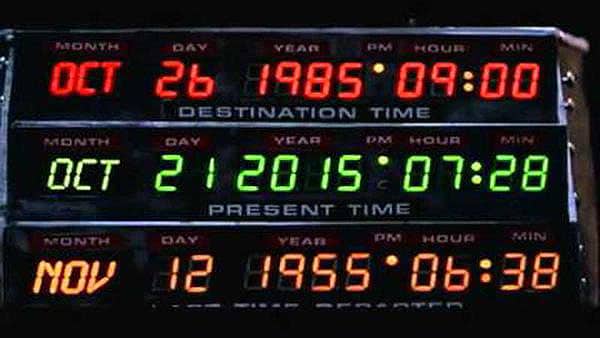
That’s ten days after this post goes live. So on October 21, celebrate Back to the Future Day the best way possible: grab a Pepsi Perfect, lace up your Nikes (self-lacing or not), and rewatch the film that made us believe time travel just might be possible.

 los, Fil-Am Renaissance Man